What Is NC Paint? Uses, Benefits & Applications for Wood and Furniture
When it comes to professional wood and furniture finishing, the choice of coating plays an important role in both appearance and application efficiency.
One commonly used coating in the furniture and woodworking industry is NC Paint, also known as Nitrocellulose Paint or NC Lacquer.
It is popular for its fast drying characteristics, smooth finish and ease of application, making it suitable for many interior wood-finishing applications.
In this article, we explain what NC Paint is, where it is used, its advantages and how it differs from other coating systems.
What Is NC Paint?
NC stands for Nitrocellulose. Nitrocellulose is used as a film-forming material in certain lacquers and coatings.
It is commonly used for decorative and protective finishing of wooden surfaces, furniture and interior components.
One of the key characteristics of NC coatings is their relatively fast drying time, which makes them suitable for production environments where finishing speed is important.
After proper surface preparation and application, NC coatings can provide a smooth and attractive finish.
What Does NC Mean in Paint?
NC stands for Nitrocellulose.
Nitrocellulose is used as a film-forming material in certain lacquers and coatings.
In an NC coating system, solvents evaporate after application, leaving behind the coating film on the surface.
Because of its application characteristics, NC coating systems are commonly used in furniture manufacturing, woodworking and decorative finishing.
Main Benefits of NC Paint
Fast Drying
One of the biggest advantages of NC Paint is its fast drying behaviour.
This can help reduce waiting time between coating operations and improve productivity in furniture and woodworking applications.
Smooth Finish
When properly applied, NC coatings can produce a smooth and visually appealing surface.
This makes them suitable for furniture, cabinets, doors and decorative wooden components.
Easy Application
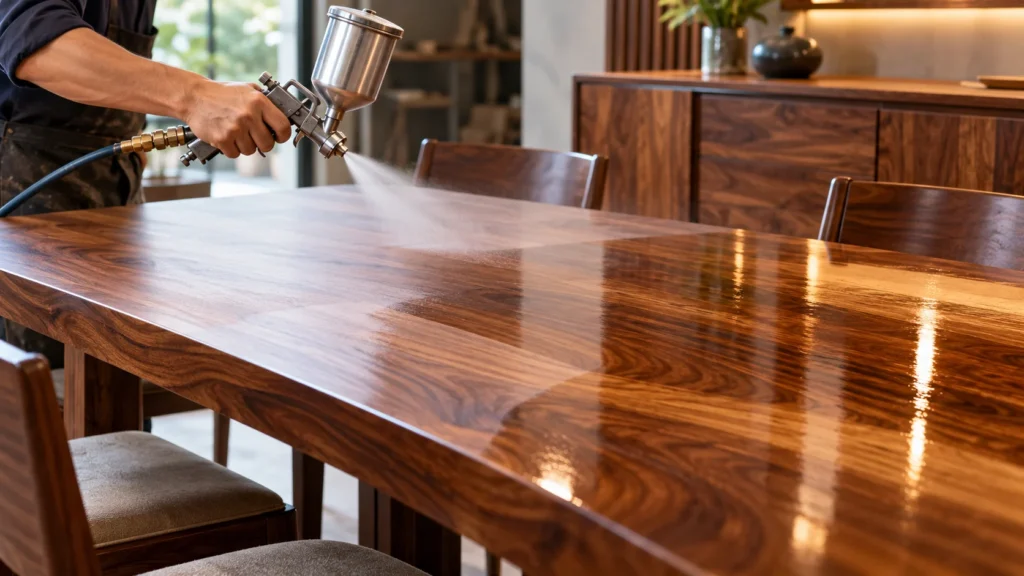
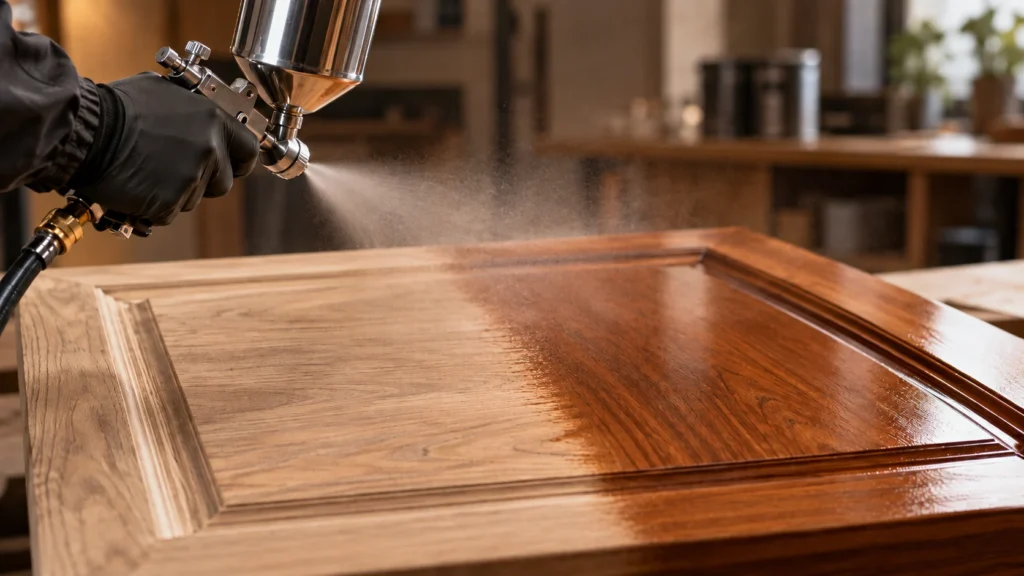
NC coatings are commonly applied using spray equipment and are relatively convenient for professional finishing operations.
Proper thinning and spray settings are important for achieving consistent results.
Easy Sanding
NC coating systems are often used along with sanding sealers.
Intermediate sanding can help create a smooth base before application of the final coating.
Good Appearance
NC finishes can provide attractive colour and surface appearance for interior furniture and wood products.
Different finish levels may be available depending on the formulation and requirement.
Where Is NC Paint Used?
NC coatings are commonly used for:
- Wooden furniture
- Tables and chairs
- Cabinets
- Doors
- Interior wooden panels
- Office furniture
- Decorative woodwork
- Wooden partitions
- Display fixtures
- Interior commercial furniture
The exact coating system should be selected according to the substrate, required finish and operating conditions.
NC Paint for Furniture
Furniture is one of the most common applications for NC coatings.
Manufacturers often require a coating that dries quickly and provides a smooth decorative finish.
After proper sanding, sealing and surface preparation, NC coatings can help achieve a clean and professional appearance.
NC Paint for Wood
NC coating systems can be used on many properly prepared wooden surfaces.
The coating process commonly includes:
Wood preparation → Sanding → Sanding Sealer → Sanding → NC Finish
The exact process may vary depending on the type of wood, desired appearance and product system.
What Is NC Sanding Sealer?
A sanding sealer is generally applied before the final finishing coat.
Its purpose is to help fill and seal the wooden surface while providing a smooth base for subsequent coating.
After drying, the sealer can be sanded to remove surface imperfections.
The final NC coat is then applied over the properly prepared surface.
For professional finishing, the sealer and topcoat should be compatible with each other.
Importance of NC Thinner
NC Thinner is used to adjust the application viscosity of compatible NC coating systems.
Correct thinner selection is important because an unsuitable solvent blend may affect:
- Drying
- Flow
- Surface finish
- Spray application
- Film formation
The thinner quantity should always be adjusted according to the product specification, application method and environmental conditions.
Excessive thinner should be avoided because it can affect coating performance and final appearance.
How Is NC Paint Applied?
Spray application is commonly used for NC coatings.
Before application, the surface should be properly cleaned and prepared.
A typical process may include:
- Sand the wooden substrate.
- Clean the surface thoroughly.
- Apply suitable sanding sealer.
- Allow the sealer to dry.
- Sand the sealed surface.
- Remove sanding dust.
- Prepare the NC coating according to product instructions.
- Apply the required coats.
- Allow sufficient drying between coats.
Application procedures should always follow the manufacturer’s Technical Data Sheet.
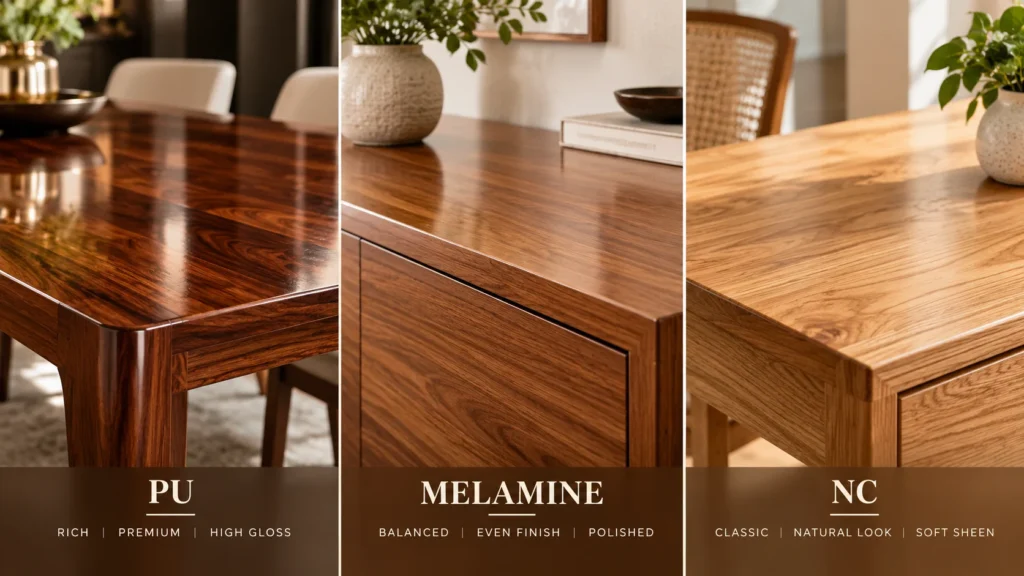
NC Paint vs PU Paint
Both NC and PU coatings are commonly used for wood finishing, but they have different characteristics.
| Feature | NC Paint | PU Paint |
|---|---|---|
| Drying | Generally fast | Depends on system |
| Application | Relatively simple | Requires controlled application |
| Finish | Smooth decorative finish | Premium protective finish |
| Sanding | Easy | Depends on coating stage |
| Furniture use | Very common | Very common |
| Durability | Suitable for many interior applications | Generally selected where higher performance is required |
| Chemical resistance | More limited | Can offer higher resistance depending on formulation |
| System | Generally solvent evaporation based | Often 1K or 2K polyurethane system |
Neither coating is automatically better for every application.
The correct choice depends on the surface, environment, finish requirement, production process and expected performance.
When Should You Use NC Paint?
NC coating can be considered when the application requires:
- Fast drying
- Smooth decorative finish
- Furniture finishing
- Interior wooden surfaces
- Easy sanding
- Efficient production cycles
For applications exposed to demanding chemicals, weathering or severe abrasion, a different coating system may be more suitable.
Common NC Paint Application Problems
Even good-quality paint can give poor results if application conditions are incorrect.
Common issues may include:
Blushing or Whitening
High humidity or incorrect thinner selection can sometimes affect the appearance of solvent-based coatings.
Poor Adhesion
Dust, oil, moisture or improper sanding may reduce coating adhesion.
Rough Finish
Incorrect spray pressure, viscosity or application distance may result in an uneven finish.
Runs and Sagging
Applying too much coating in one pass can cause sagging or runs.
Uneven Gloss
Incorrect application, inconsistent film thickness or unsuitable drying conditions may affect the final appearance.
Proper surface preparation and application control are therefore essential.
NC Paint for Professional Furniture Finishing
Furniture manufacturers need coatings that provide appearance while also supporting efficient production.
NC coating systems remain useful for many interior furniture-finishing applications because of their application convenience and fast drying.
However, coating selection should always consider the intended use of the furniture and the required performance.
How to Choose the Right NC Coating
Before selecting an NC coating system, consider:
- Type of wood
- Surface condition
- Interior or exterior use
- Required colour
- Gloss level
- Drying requirement
- Application method
- Production speed
- Final surface performance
For the best result, the complete system—including sanding sealer, thinner and finishing coat—should be selected for compatibility.
Velora Paints – Professional Wood & Industrial Coating Solutions
At Velora Paints, we focus on coating solutions designed for professional, commercial and industrial applications.
Our range includes products for wood, metal and industrial finishing, including:
PU Coatings
NC Coatings
Sanding Sealers
Primers
Thinners
Industrial Coatings
Selecting the right coating system can help achieve better application consistency, appearance and long-term performance.
For product information and coating requirements, contact the Velora Paints team.
Velora Paints
www.velorapaints.com
info@velorapaints.com
+91 7900 7900 11
FAQs
What is NC Paint?
NC Paint is a nitrocellulose-based coating commonly used for furniture, wood and interior decorative finishing.
Is NC Paint suitable for furniture?
Yes. NC coatings are widely used for furniture because they provide fast drying and a smooth decorative finish.
What is the difference between NC Paint and PU Paint?
NC coatings are generally known for fast drying and application convenience, while PU coating systems are often selected where higher durability and resistance are required.
Does NC Paint require hardener?
Many conventional NC coatings dry mainly through solvent evaporation and do not use a hardener like typical 2K PU systems. Always follow the specific product Technical Data Sheet.
Why is sanding sealer used before NC Paint?
Sanding sealer helps seal and prepare the wood surface, providing a smoother base for the final finishing coat.
Can NC Paint be used outdoors?
NC coatings are more commonly associated with interior applications. Exterior suitability should be verified from the specific product’s technical specification.