Furniture finishing is not only about improving appearance. The right coating also helps protect the wooden surface and achieve the required level of smoothness, gloss and durability.
One finishing system commonly used for furniture and interior woodwork is Melamine Polish.
It is popular for wooden furniture, doors, cabinets and decorative interior surfaces where a smooth and attractive finish is required.
In this guide, we explain what melamine finish is, its major benefits, where it is used and how it compares with PU and NC coatings.
What Is Melamine Polish?
Melamine polish is a type of wood-finishing coating used to provide a smooth decorative and protective layer over properly prepared wooden surfaces.
Depending on the particular formulation, the coating system may involve multiple preparation and finishing stages.
The final result depends not only on the topcoat but also on:
- Wood preparation
- Sanding
- Sealing
- Correct mixing
- Application technique
- Drying and curing conditions
This is why professional wood finishing should always be treated as a complete coating system rather than simply applying a final coat.
Why Is Melamine Finish Used on Wood?
Wood is naturally porous and may absorb coatings unevenly if the surface is not prepared correctly.
A suitable finishing system helps create a more uniform appearance while providing a protective coating over the substrate.
Melamine finishes are commonly selected for interior furniture and woodwork where appearance, smoothness and practical everyday performance are important.
Main Benefits of Melamine Polish
1. Smooth Appearance
One of the primary advantages of a melamine finish is the clean and smooth appearance it can provide when applied over a correctly prepared wooden surface.
This makes it particularly suitable for furniture and decorative interior applications.
2. Attractive Finish
Melamine coatings can help enhance the appearance of furniture while allowing the natural character of the underlying wood to remain an important part of the finished product.
Different finish levels may be available depending on the formulation.
3. Suitable for Furniture
Melamine finishing systems are commonly used for:
- Tables
- Chairs
- Cabinets
- Wardrobes
- Doors
- Wooden panels
- Office furniture
- Interior fixtures
- Decorative woodwork
4. Surface Protection
A correctly selected wood finish provides an additional protective layer over the wooden substrate.
Actual resistance to scratching, moisture, chemicals and wear depends on the individual product formulation and coating system.
5. Professional Finish
Proper sanding, sealing and controlled application can help achieve a consistent surface suitable for professional furniture manufacturing and interior wood-finishing work.
Melamine Polish for Furniture
Furniture is one of the most common applications for this type of wood finish.
A furniture surface must often combine appearance with practical usability.
For this reason, the complete finishing process is important.
A typical system may involve:
Wood Preparation → Sanding → Sealer → Intermediate Sanding → Melamine Finish
The exact procedure, number of coats and drying time should always follow the manufacturer’s Technical Data Sheet.
Melamine Polish for Wooden Doors
Melamine finishing systems may also be used for suitable interior wooden doors and frames.
Before application, the wood should be properly:
- Dried
- Sanded
- Cleaned
- Sealed where required
- Free from dust and contamination
Correct surface preparation helps improve the consistency of the final appearance.
Importance of Sanding Sealer
A sanding sealer may form an important part of a professional wood-finishing system.
The sealer helps prepare the wooden surface and creates a layer that can be sanded before subsequent finishing coats.
After drying, careful sanding can help produce a smoother base.
A quality wood sealer helps create a more even base for subsequent finishing coats.
How Is Melamine Polish Applied?
The application procedure depends on the specific product, but a general professional process may include the following stages.
Step 1: Prepare the Wood
The wooden substrate should be dry and free from oil, wax, dirt and other contamination.
Step 2: Sand the Surface
Proper sanding helps remove irregularities and prepares the surface for the coating system.
Step 3: Clean the Surface
Remove all sanding dust before applying the next product.
Step 4: Apply the Recommended Sealer
Use a compatible sealer if specified as part of the coating system.
Step 5: Sand After Drying
Once the sealer has dried sufficiently, sand the surface carefully to obtain the required smoothness.
Step 6: Prepare the Finish
Mix or thin the product only according to the manufacturer’s instructions.
Step 7: Apply the Finishing Coats
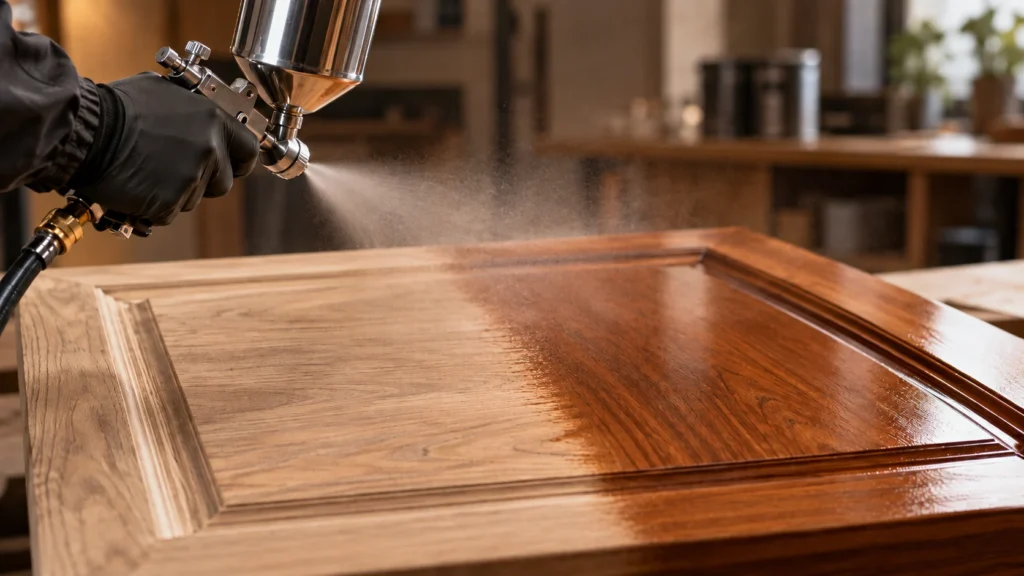
Spray application is commonly used for professional wood finishing, depending on the product.
Step 8: Allow Proper Drying and Curing
Do not handle, polish or put the finished furniture into service before the coating has sufficiently dried or cured.
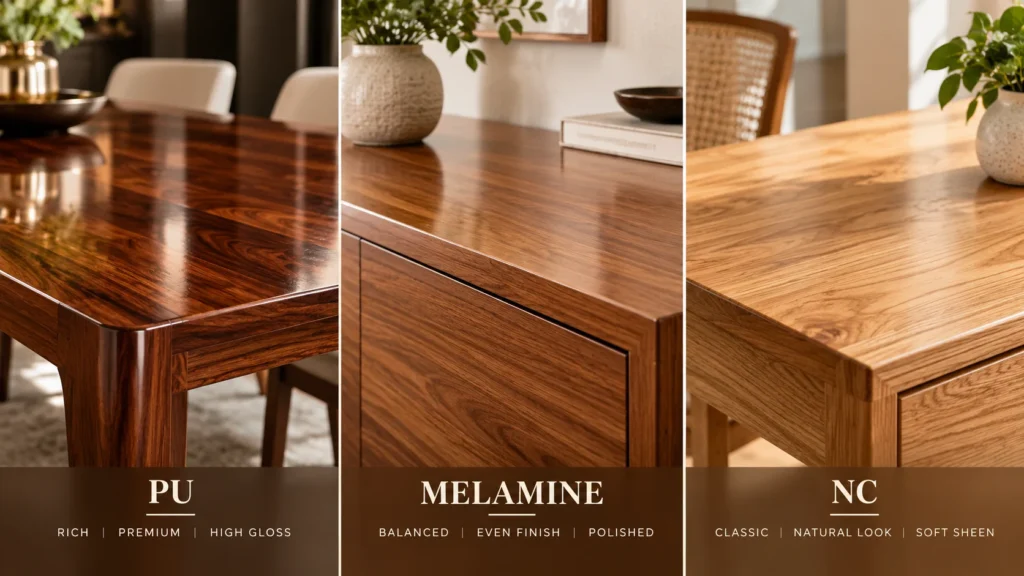
Melamine Polish vs PU Polish
Both are used for wood finishing, but they should not automatically be considered interchangeable.
| Feature | Melamine Finish | PU Finish |
|---|---|---|
| Common use | Interior furniture & woodwork | Furniture, wood and higher-performance finishing |
| Appearance | Smooth decorative finish | Premium decorative and protective finish |
| Application | Professional wood finishing | Usually requires controlled application |
| Durability | Suitable for many interior uses | Generally chosen where higher resistance is required |
| Chemical resistance | Depends on formulation | Can offer higher resistance depending on system |
| Cost | Generally economical | Often positioned as a higher-performance system |
The right choice depends on the furniture, exposure conditions, required appearance and expected service life.
Melamine Polish vs NC Polish
NC and melamine systems are both widely associated with furniture finishing, but they offer different application and performance characteristics.
NC coatings are particularly known for fast drying and application convenience.
Melamine finishing systems are often selected when a furniture manufacturer requires a different balance of appearance, surface performance and finishing characteristics.
Neither product should be selected only on price.
The intended use of the furniture should determine the coating system.
Melamine Polish vs Laminate
These are completely different products.
Melamine polish is a coating applied over a prepared wooden substrate.
A laminate is a manufactured decorative sheet applied over substrates such as plywood, MDF or other suitable boards.
Polishing allows the character of the wood and coating finish to remain visible, whereas laminates provide a separate decorative surface layer.
Where Is Melamine Polish Commonly Used?
Suitable melamine wood-finishing systems may be used for:
Home furniture
Office furniture
Wardrobes
Cabinets
Dining tables
Wooden doors
Interior panels
Commercial furniture
Display fixtures
Decorative wood components
Always verify that the selected product is suitable for the particular application and environment.
Common Mistakes During Application
Poor Surface Preparation
Coating over dust, oil or an uneven substrate may result in poor appearance or adhesion.
Incorrect Mixing
If the selected product requires mixing with another component, follow the specified ratio accurately.
Using the Wrong Thinner
Only the recommended compatible thinner should be used.
Applying Heavy Coats
Excessive coating thickness can affect drying and surface appearance.
Insufficient Drying
Applying subsequent coats too soon can cause finishing problems.
Mixing Incompatible Products
Sealer, thinner and finishing coat should form part of a compatible coating system.
Is Melamine Polish Suitable for Exterior Wood?
This depends entirely on the specific product formulation.
Many furniture-oriented melamine finishing systems are primarily intended for interior wooden applications.
For wood exposed to sunlight, rain, moisture and changing weather conditions, a coating specifically designed and tested for exterior exposure should be selected.
Do not assume that an interior furniture finish is suitable outdoors.
How to Choose the Right Wood Finish
Before selecting any wood coating, consider:
- Type of wood
- Interior or exterior use
- Required durability
- Desired gloss
- Colour requirement
- Exposure to moisture
- Expected wear
- Application method
- Budget
- Maintenance expectations
The correct coating is the one that matches the actual application—not simply the most expensive product.
Proper surface preparation is an essential part of achieving a consistent and durable wood finish.
Melamine Finish for Professional Furniture Manufacturing
Furniture manufacturers often require consistency across multiple pieces.
For repeatable finishing quality, attention should be given to:
- Wood moisture
- Sanding procedure
- Sealer compatibility
- Mixing ratio
- Spray settings
- Film thickness
- Drying time
- Workshop temperature
- Dust control
Following a consistent process helps improve production quality and reduces avoidable finishing defects.
Velora Paints – Professional Wood Coating Solutions
At Velora Paints, we offer coating solutions for professional furniture, wood and industrial finishing applications.
Our range includes:
- Melamine Coatings
- PU Coatings
- NC Coatings
- Sanding Sealers
- Primers
- Thinners
- Specialised Wood Finishes
Using compatible products throughout the coating system helps achieve better application consistency and the desired finish.
For product selection and coating requirements, contact Velora Paints.
Velora Paints
www.velorapaints.com
info@velorapaints.com
+91 7900 7900 11
FAQs
What is melamine polish?
Melamine polish is a wood-finishing coating used to provide a smooth decorative and protective finish on properly prepared wooden surfaces.
Where is melamine polish used?
It is commonly used for furniture, cabinets, wardrobes, doors and other suitable interior wooden surfaces.
Is melamine polish good for furniture?
Yes, it is commonly used for interior furniture applications where a smooth and attractive finish is required.
Which is better: melamine or PU polish?
Neither is universally better. PU systems are generally selected where higher performance is required, while melamine finishes can be suitable for many interior furniture applications.
Is sanding sealer required before melamine polish?
A compatible sanding sealer may be part of the recommended finishing system. Always follow the product manufacturer’s specification.
Can melamine polish be used outdoors?
Many furniture-oriented systems are intended mainly for interior applications. Exterior suitability must be confirmed from the individual product specification.