WHAT IS PU PAINT? USES, BENEFITS & APPLICATIONS FOR WOOD AND METAL
Choosing the right coating is important when a surface requires more than just colour. It may also need durability, resistance, smoothness and a professional finish.
This is where PU Paint, also known as Polyurethane Paint, is widely used.
PU coatings are commonly selected for wood, metal, furniture, machinery and several industrial applications where appearance and surface protection are both important.
In this guide, we explain what PU paint is, how it works, its major benefits and where it can be used.
What Is PU Paint?
PU Paint is a coating based on polyurethane chemistry that forms a strong protective film after proper application and curing.
Depending on the product and application requirement, polyurethane coatings are available in different formulations and finish levels.
PU coatings can provide surfaces with a smooth appearance while helping protect them from regular wear, moisture, chemicals and abrasion.
Because of this combination of appearance and performance, PU paints are widely used in furniture finishing as well as industrial and commercial coating applications.
What Does PU Mean in Paint?
PU stands for Polyurethane, a versatile material chemistry widely used in coatings, adhesives, sealants and many industrial applications.
A complete PU coating system may include surface preparation, primer or sealer, intermediate preparation and the final polyurethane topcoat.
The exact coating system should always be selected according to the substrate, exposure conditions and required performance.
What Are the Main Benefits of PU Paint?
1. Durable Finish
PU coatings can provide a tough and durable surface when the correct coating system is selected and properly applied.
This makes them useful for surfaces that experience regular handling, cleaning or mechanical wear.
2. Smooth and Premium Appearance
One of the major reasons PU coatings are popular in furniture and commercial applications is their high-quality finished appearance.
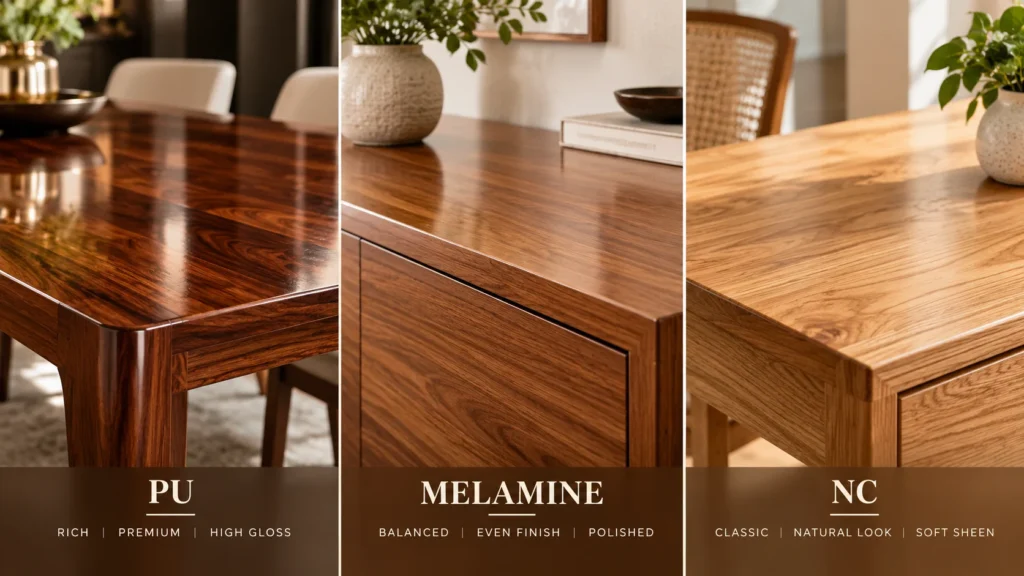
Depending on the formulation, PU coatings can be supplied in different gloss levels ranging from matt and satin to high gloss.
3. Abrasion Resistance
Industrial surfaces may experience rubbing, movement, handling and general wear.
A properly selected polyurethane coating can provide good resistance to abrasion and help maintain the appearance of the coated surface.
4. Chemical and Water Resistance
Certain PU coating systems can provide resistance against water and various chemicals.
The actual level of resistance depends on the coating formulation, film thickness, curing and operating environment.
For demanding industrial environments, the complete coating specification should therefore be selected according to the chemicals and conditions involved.
5. Good Adhesion with Proper Surface Preparation
Proper surface preparation is one of the most important parts of any paint system.
When the substrate is properly cleaned, prepared and primed where required, PU coatings can provide strong adhesion on suitable wood and metal surfaces.
6. Attractive Colour and Finish Options
PU coatings can be manufactured in a wide variety of colours and finish levels.
This allows designers, furniture manufacturers, fabricators and industrial users to combine surface protection with the required appearance.
PU Paint for Wood
PU paint and polyurethane finishes are widely used in wood finishing applications.
They may be used on:
Furniture
Doors
Tables
Cabinets
Wooden panels
Office furniture
Commercial interiors
Decorative wooden components
A PU coating system can enhance the appearance of the wood while providing an additional protective layer over the surface.
The final result depends heavily on sanding, surface preparation, sealer selection, coating thickness and correct application.
PU Paint for Furniture
Furniture surfaces often require both appearance and durability.
PU finishes are suitable for applications where a smooth and refined surface is required along with resistance to everyday use.
Different gloss levels can also be selected depending on the desired appearance of the furniture.
PU Paint for Metal
Polyurethane coatings are also widely used as finishing coats on properly prepared metal surfaces.
Typical applications may include:
Industrial machinery
Fabricated metal components
Equipment
Metal furniture
Structural components
Commercial fixtures
Industrial enclosures
For metal applications, PU is generally used as part of a complete coating system rather than simply applying the topcoat directly over an untreated surface.
Surface cleaning, rust removal, suitable primer selection and correct application are essential for long-term coating performance.
Why Is Surface Preparation Important?
Even a high-quality coating cannot perform properly if the underlying surface is contaminated, loose, oily or poorly prepared.
Before PU paint application, the surface may require:
Cleaning and degreasing
Removal of rust or loose coating
Sanding or surface preparation
Suitable primer or sealer
Dust removal
Correct drying before topcoat application
The exact preparation method depends on whether the substrate is wood, mild steel, aluminium or another material.
1K vs 2K PU Paint
PU coatings may be available as one-component (1K) or two-component (2K) systems.
A 1K coating is supplied as a single-component system.
A 2K coating generally consists of a base component that is mixed with the specified hardener or curing component before application.
Two-component PU systems are commonly used where higher coating performance is required.
Mixing ratios, pot life, thinner selection and application conditions should always follow the product’s Technical Data Sheet.
PU Paint vs Regular Paint
Regular decorative paint and PU paint are designed for different requirements.
Decorative paints primarily provide colour and surface appearance.
PU coatings are often selected when the requirement includes a combination of:
Durability
Surface protection
Abrasion resistance
Chemical resistance
Premium appearance
Controlled gloss
Industrial performance
This is why choosing paint should be based on the actual application rather than simply selecting a product based on colour.
Where Is PU Paint Commonly Used?
PU coatings can be used across a wide range of industries and applications depending on the specific formulation.
Common areas include:
Furniture manufacturing
Wood finishing
Metal fabrication
Industrial equipment
Commercial interiors
Machinery components
Automotive-related components
Architectural metalwork
Factory-finished products
The coating specification should always match the substrate and operating environment.
How to Choose the Right PU Paint
The right polyurethane coating depends on several factors.
First, identify the substrate. A coating system for wood may be different from one intended for mild steel or another metal.
Second, consider whether the surface will be used indoors or outdoors.
Third, understand the expected exposure to moisture, chemicals, abrasion, sunlight and regular handling.
Finally, determine the required appearance, including colour and gloss level.
A technically suitable coating system should balance both appearance and performance.
Importance of Primer and Complete Coating System
A topcoat is only one part of the coating system.
For metal surfaces, the correct primer can help improve adhesion and corrosion protection.
For wood surfaces, sanding, sealing and proper preparation can help achieve a smooth and consistent finish.
Using compatible primer, thinner, hardener and topcoat products is important because coating performance depends on the entire system working together.
Application of PU Paint
PU coatings can be applied using different methods depending on the product and project requirements.
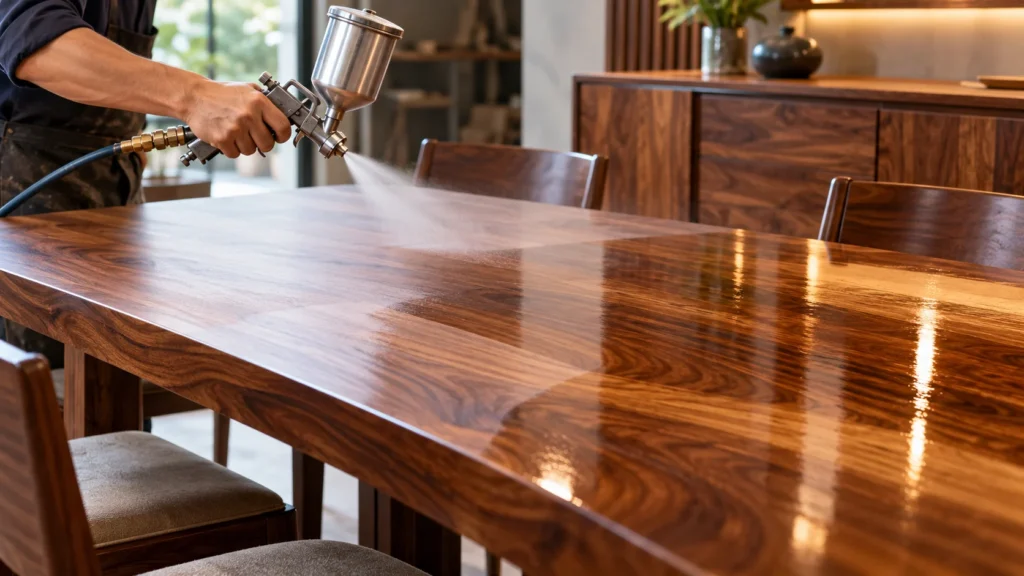
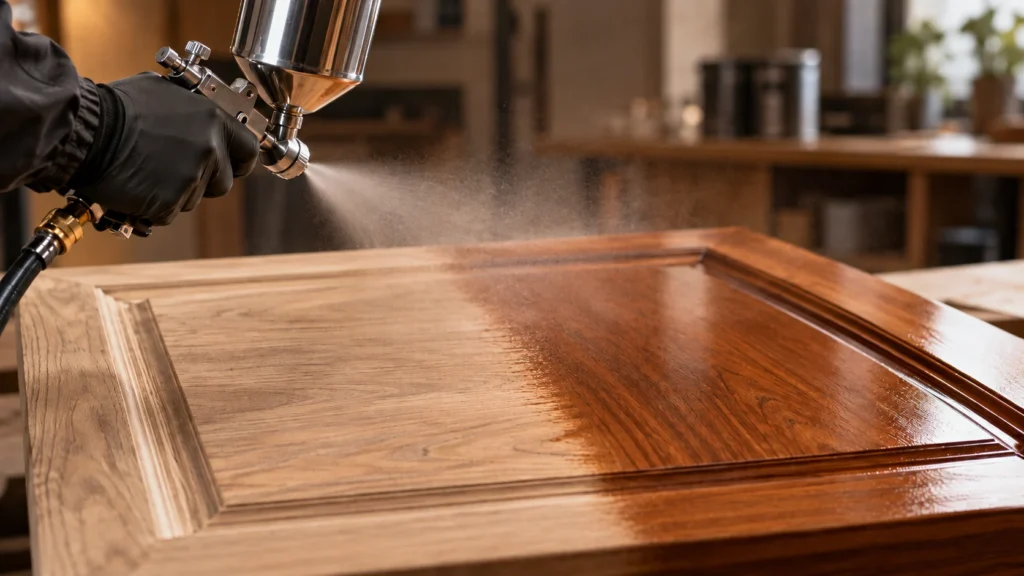
Spray application is commonly used when a smooth, controlled and professional finish is required.
However, application conditions such as temperature, humidity, mixing ratio, thinner percentage, spray pressure, flash-off time and curing conditions can affect the final result.
Applicators should always follow the manufacturer’s Technical Data Sheet before use.
Common Mistakes to Avoid with PU Paint
Poor surface preparation is one of the most common reasons for coating failure.
Other problems can arise from incorrect hardener ratios, excessive thinner, incompatible primers, insufficient drying time between coats or applying excessive film thickness in a single coat.
Dust, moisture and contamination in the painting area can also affect the final appearance.
For consistent results, every stage of the coating process should follow the recommended application procedure.
Why Choose the Correct Industrial Coating?
The cheapest paint is not necessarily the most economical coating over the life of an asset.
A coating should be selected according to the surface, environment, expected life and maintenance requirements.
The correct coating system can help reduce premature repainting, improve appearance and protect valuable surfaces for longer periods.
Velora Paints – Coating Solutions for Wood and Metal
At Velora Paints, our focus is on developing coating solutions for professional, commercial and industrial applications.
Our product range includes coatings and related products for wood, metal and industrial surfaces, including PU coatings, NC coatings, primers, thinners, sanding sealers and other specialised finishing products.
Choosing the correct coating system is important for achieving the required finish and long-term performance.
For product selection or coating requirements, contact the Velora Paints team.
Velora Paints
Website: www.velorapaints.com
Email: info@velorapaints.com
Phone: +91 7900 7900 11
FREQUENTLY ASKED QUESTIONS
What is PU paint used for?
PU paint is commonly used as a protective and decorative finishing coating for wood, metal, furniture, machinery and several commercial and industrial applications.
Is PU paint suitable for wood?
Yes. Suitable polyurethane coating systems are widely used for furniture, doors, cabinets, wooden panels and other wood finishing applications.
Can PU paint be applied on metal?
Yes, provided the metal surface is properly prepared and the appropriate primer and coating system are selected.
What is the difference between PU paint and normal paint?
PU coatings are generally selected for applications requiring higher durability, surface resistance and a premium finish, while ordinary decorative paints may primarily be intended for colour and general surface decoration.
Does PU paint require a hardener?
Many two-component PU coatings require a specified hardener. However, the requirement depends on the particular product formulation. Always follow the manufacturer’s Technical Data Sheet.
Can PU paint be used outdoors?
Certain PU coating systems are designed for exterior use, while others are intended only for interior applications. The product specification should therefore be checked before use.
Is surface preparation necessary before applying PU paint?
Yes. Correct cleaning, sanding, degreasing, rust removal and priming where required are essential for good adhesion and coating performance.