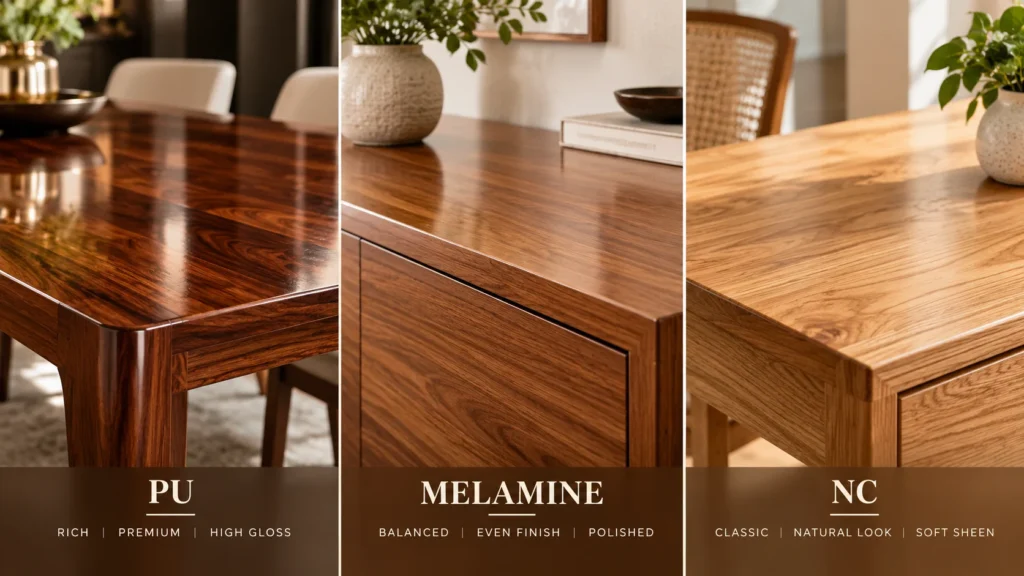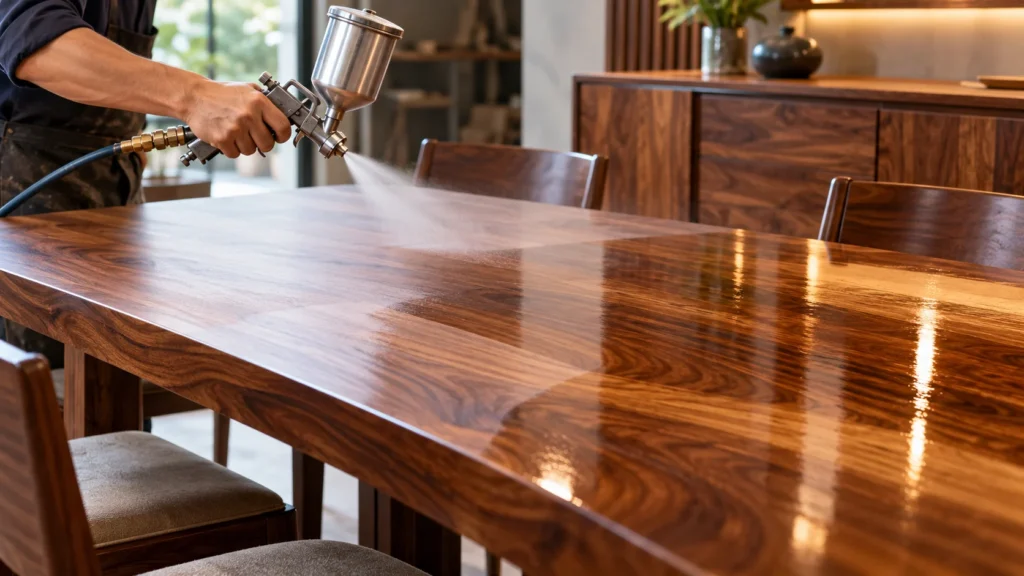
The final coat is not where a beautiful wood finish starts.
The quality of the final appearance is highly dependent on how well the wooden surface is prepared before the finishing coating is applied.
A common product used in this stage of preparation is Sanding Sealer.
It is commonly used in furniture and professional wood finishing to help create a smoother surface before applying coatings such as NC, PU and other compatible wood finishes.
In this guide, we’ll explain what sanding sealer is, what it does, where it is used and why proper surface preparation is important.
What Is Sanding Sealer?
Sanding Sealer is a preparatory coat applied to properly prepared wood prior to the application of final finishing coats.
Its function is to assist in sealing the surface and providing a more uniform base that can be sanded prior to the application of the next compatible coating.
Wood is naturally porous, and the surface may have variations in grain and absorption.
This surface can be prepared with a suitable sealer so that later finishing coats can be applied more consistently.
The type of sealer you need is determined by the wood, the finishing system and the topcoat you will use.
What Is the Purpose of Sanding Sealer?
Sanding sealer provides an intermediate layer between the prepared wood and the finishing system.
Depending on the formulation, it can help:
- Seal porous wood surfaces
- Reduce irregular absorption
- Prepare the surface for sanding
- Create a smoother base
- Improve the appearance of subsequent coats
- Support a more uniform finishing process
The U.S. Forest Products Laboratory also states that surface preparation and the choice of finishing system are important factors in developing an effective wood finish.
Reference: USFS Research & Development.
Why Is Sanding Sealer Used on Wood?
Wood has natural grain variations, pores and fibres.
If the finishing coat is applied directly without proper preparation, different areas of the surface may absorb the coating differently.
This can result in a streaky or uneven appearance.
To prepare the surface before applying the final finish, a compatible Sanding Sealer for Wood can be used.
It is particularly useful in professional furniture making and wood finishing applications where a smooth and consistent appearance is desired.
Top Benefits of Sanding Sealer
1. Assists in Creating a Smooth Surface
One of the primary reasons for using a sanding sealer is that it forms a layer that can be sanded to create a smoother surface.
Once the sealer has dried, appropriate sanding can help remove minor surface irregularities before the finishing coat.
2. Aids in Sealing Wood Porosity
Different wood species will absorb coatings at different rates.
A suitable sealer can help reduce excessive or uneven absorption and prepare the surface for subsequent coats.
3. Reduces Surface Preparation Effort
Some sanding sealers are formulated to sand easily once they dry.
This may improve the efficiency of professional furniture and wood finishing operations.
4. Promotes a Uniform Finish
Proper preparation can give the final coating a smoother and more uniform appearance.
However, the overall outcome also depends on application method, coating compatibility, environmental conditions and applicator technique.
5. Practical Uses in Professional Wood Finishing Systems
Sanding sealers are frequently used when finishing:
- Furniture
- Wood doors
- Cabinets
- Chests of drawers
- Tables
- Wooden panelling
- Interior woodwork
- Commercial furniture
- Decorative wooden elements
What Is NC Sanding Sealer?
NC Sanding Sealer is a nitrocellulose-based wood sealer used in compatible wood finishing systems.
It is often selected where rapid drying and easy sanding are required.
NC sealer can be part of a coating system that will eventually be top-coated with an NC or another compatible finish, as per the manufacturer’s specification.
Sealer and topcoat compatibility is crucial.
Never assume all sealers are compatible with all types of coatings.
Sanding Sealer and NC Paint
Sanding sealer is often used in preparation for NC coating systems.
A typical process might include:
Wood Preparation → Sanding → Sealer → Sanding → NC Finish
The number of coats to apply, the drying time and the sanding method will depend on the products you choose and the finish you want to achieve.
Can You Apply Sanding Sealer Before PU?
This depends on the sealer and PU coating system used.
Some compatible systems may require a suitable sealer prior to the polyurethane finish, while others require the use of their own specific basecoat or sealer.
Therefore, always check the Technical Data Sheet (TDS) of the coating manufacturer before combining products.
This is especially important with professional coatings, as incompatible layers can affect adhesion or final performance.
Wood Primer vs Sanding Sealer
Both are used before finishing coats but are not necessarily the same product.
A sanding sealer is usually used as part of a wood finishing system to seal and prepare the wood surface.
Primers are typically selected for a particular substrate and topcoat system to provide the right foundation for subsequent coatings.
Hence, choose the right product based on:
- Substrate
- Required surface finish
- Topcoat
- Application method
- Exposure conditions
- Manufacturer’s coating system
Sanding Sealer vs Wood Filler
These products serve different purposes.
Wood filler is usually used to fill pores, dents, cracks or surface imperfections, depending on the type of product and wood.
Sanding sealer is used as a preparatory coating layer before subsequent finishing coats.
In some wood finishing processes, both products may be used at different stages.
How to Apply Sanding Sealer on Wood
The application method differs from product to product, but a typical professional process might include:
Step 1 – Prepare the Wood
The wood should be clean, dry and free from oil, wax, dust and contamination.
Step 2 – Sand the Surface
Sand the wood surface properly, working carefully with the grain direction where applicable.
Step 3 – Remove Dust
Ensure all sanding dust is removed thoroughly before coating.
Dust on the surface can affect the quality of the finish.
Step 4 – Prepare the Sealer
If thinning or mixing is necessary, use only the recommended thinner and mixing ratio provided by the manufacturer.
Step 5 – Apply the Sealer
Apply evenly using the recommended application method.
Spray application is common in professional furniture finishing, depending on the product.
Step 6 – Allow Proper Drying
Do not sand or overcoat until the recommended drying period has elapsed.
Step 7 – Sand the Sealed Surface
When the sealer is sufficiently dry, sand it carefully to produce an even, smooth base.
Step 8 – Clean Before Topcoating
Make sure to remove any sanding residue before applying the compatible final coating.
Always refer to the specific Technical Data Sheet for the product you are using.
Common Mistakes When Using Sanding Sealer
1. Applying Too Much Material
More material doesn’t necessarily create a better surface.
Film build should follow the manufacturer’s recommendations.
2. Poor Surface Cleaning
Contamination with dust, oil or other substances can affect adhesion and the appearance of subsequent coats.
3. Using the Wrong Thinner
The use of an unsuitable thinner may affect application, drying and finish quality.
4. Insufficient Drying Time
Sanding or recoating too soon can damage the coating layer.
5. Using an Incompatible Topcoat
Perhaps the most important mistake is mixing coating products without checking compatibility.
The entire coating system must be designed to work as a unit.
Do I Always Need to Use Sanding Sealer?
No.
Sanding sealer should be used where appropriate for the wood and coating system chosen.
Professional woodworking guidance notes that sanding sealer is not necessary for every finishing job, and its usefulness depends on the substrate and finishing system.
Reference: Rockler Woodworking
Instead of automatically applying sealer to all wooden surfaces, choose the appropriate system depending on the desired finish.
Where Is Sanding Sealer Normally Used?
Sanding sealer can be used in suitable systems for:
- Furniture production
- Doors and frames
- Wardrobes and cupboards
- Wooden tables and chairs
- Wooden interior panels
- Ornamental carpentry
- Commercial interiors
- Wood fixtures
In professional manufacturing, consistent surface preparation is especially important when trying to achieve repeatable results across multiple components.
The Importance of Surface Preparation in Wood Finishing
The quality of the final coating depends on the quality of the surface underneath it.
Sanding, cleaning, sealing and proper intermediate preparation can have a significant effect on the final appearance.
Even the best finishing materials may not give the desired result when applied to an improperly prepared base.
This is why professional wood finishing should be considered a complete coating system, not just a final coat.
A crucial step in achieving a lasting and uniform wood finish is proper surface preparation.
Velora Paints – Solutions for Wood Coating
At Velora Paints, we offer coating solutions for professional wood and industrial finishing applications.
Our wood coatings range includes solutions such as:
- PU Coatings
- NC Coatings
- Melamine Coatings
- Sanding Sealers
- Primers
- Thinners
- Specialist Wood Finishes
Choosing products that are compatible throughout the entire coating system can contribute to improved consistency of application and help achieve the desired finish.
Contact the team at Velora Paints for product selection and coating requirements.
Velora Paints
Website: www.velorapaints.com
Email: info@velorapaints.com
Phone: +91 7900 7900 11
Frequently Asked Questions (FAQs)
1. What Does Sanding Sealer Mean?
Sanding sealer is a preparatory coating applied over suitable wooden surfaces before the final finishing coats. It assists in preparing a smoother and more even base for subsequent coatings.
2. What Is the Purpose of Sanding Sealer?
It is often used in furniture and wood finishing to seal the prepared surface and provide a layer that can be sanded before the application of compatible finishing coats.
3. Is Sanding Sealer the Last Coat?
No. Sanding sealer is usually part of the preparation process and is followed by a compatible finishing coating.
4. Do You Sand Sealer Before NC Paint?
Yes, in systems that specify this process. Compatible sanding sealers are often used in NC wood finishing systems. Always follow the manufacturer’s recommended system.
5. Can I Use Sanding Sealer Before PU?
It depends on the product. A compatible PU system and sealer must be used, and the Technical Data Sheets should be checked before application.
6. Do You Have to Sand Sanding Sealer?
Usually, sanding is part of the process once the sealer is sufficiently dry to provide a smooth base for the next coats.