ACP coating lifespan depends on the quality of the coating system, surface preparation, application method, environmental exposure and regular maintenance. A properly selected and professionally applied ACP coating can help protect Aluminium Composite Panels from fading, chalking, moisture and weather-related deterioration.
Understanding the factors that affect coating durability can help building owners plan maintenance and refurbishment more effectively.
What Is ACP Coating?
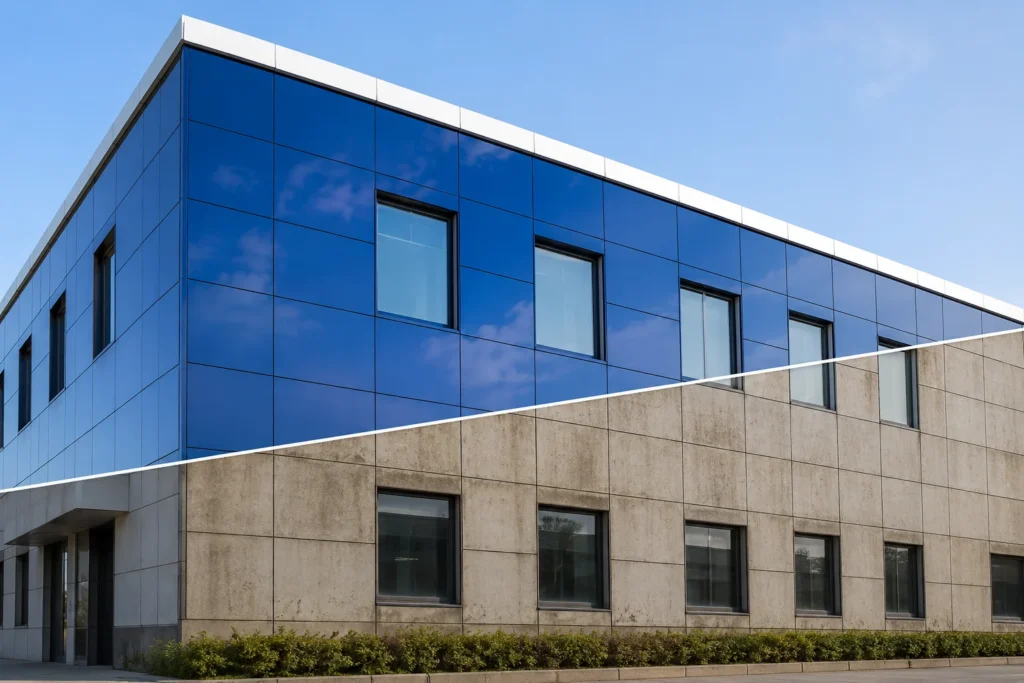
ACP coating is a specialised surface coating applied to Aluminium Composite Panels to protect them from sunlight, rain, moisture, pollution and changing weather conditions.
It creates an additional protective layer that helps preserve the panel’s colour, gloss and overall appearance. When applied correctly, ACP coating can also reduce surface deterioration and delay the need for complete panel replacement.
Durability and UV Protection
Continuous exposure to sunlight can cause ACP panels to fade, lose gloss and develop a weathered appearance. High-quality ACP coatings are designed to improve resistance to UV radiation and environmental exposure.
By protecting the surface from fading, chalking and moisture-related damage, the coating helps maintain the façade’s appearance and performance for a longer period.
How to Extend the Life of ACP Coating
Regular cleaning and inspection are important for maintaining the coating system. Dust, pollution, grease and other contaminants should be removed using water, mild detergent and a soft cloth or sponge.
Harsh chemicals, abrasive tools and high-pressure washing should be avoided because they may damage the coating. Any scratches, sealant failure or surface defects should be repaired promptly.
Factors That Affect ACP Coating Lifespan
The service life of an ACP coating depends on several factors, including:
- Quality and type of coating used
- Surface preparation before application
- Coating thickness and application method
- Exposure to sunlight, rain and pollution
- Coastal or industrial environmental conditions
- Frequency of cleaning and maintenance
- Physical impact and surface damage
Professional application and the use of compatible materials are essential for achieving long-term coating performance.
In India, BIS IS 17682:2021 for Aluminium Composite Panels includes requirements and testing relating to surface coatings, including coating thickness, adhesion, hardness, gloss, weathering and chemical resistance.
How Long Does ACP Coating Last?
There is no single service-life figure that applies to every ACP coating system. Performance depends on the coating chemistry, number of coats, dry film thickness, surface preparation, application quality and exposure conditions.
Façades exposed to intense sunlight, coastal environments, industrial pollution or frequent moisture may require more maintenance than surfaces in moderate conditions. Regular inspection and timely repair of damaged areas can help maximise the useful life of the coating system.
Always refer to the coating manufacturer’s technical specifications and project requirements when determining the expected durability of a particular system.
Maintenance and Care Tips
Inspect ACP façades regularly for fading, cracks, loose panels, damaged joints and water stains. Clean the surface using mild products and ensure that drainage systems are functioning correctly.
Keep corrosive chemicals and abrasive materials away from the panels. Damaged areas should be repaired before moisture or contamination spreads beneath the coating.
Conclusion
ACP coating lifespan depends on correct surface preparation, coating quality, application control, environmental exposure and maintenance.
Velora Paints provides specialised ACP coating solutions for protecting and restoring commercial, residential and industrial façades. Learn more about the ACP recoating process or contact Velora Paints for project-specific coating guidance.